Česká verze
-
Department of Design

-
Department of Textile Evaluation
-
Department of Nonwovens and Nanofibrous Materials
-
Department of Material Engineering
-
Department of Clothing Technology
-
Department of Technologies and Structures



News | Ft.Tul.cz
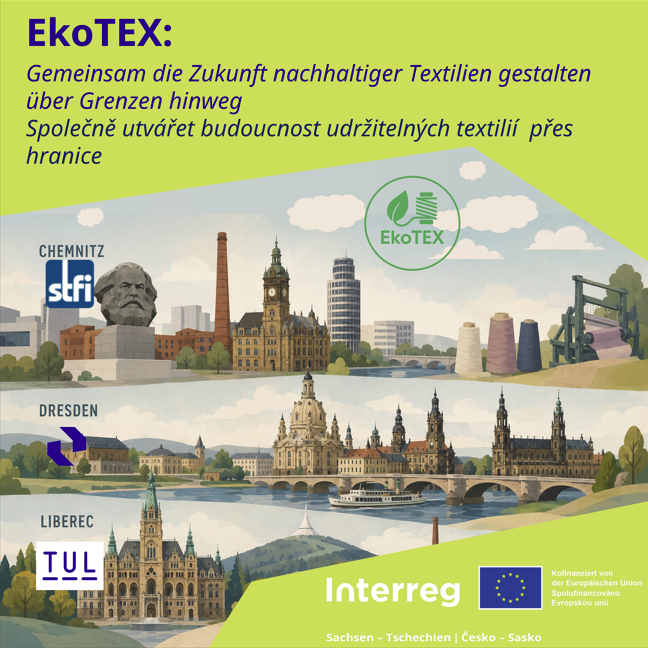
 Textile Future Starts with Education (EkoTEX)
The Department of Material Engineering (KMI FT TUL) launches the international project EkoTEX (No. 100799814) in collaboration with TU Dresden (ITM) and the Saxon Textile Research Institute (STFI). The project is co-funded by the European Union under the Interreg Saxony–Czech Republic 2021–2027 programme and strengthens cross-border innovations in the sustainable textile industry.
What to look forward to?
- Joint workshops and laboratory events for students and professionals.
- Bilingual online courses and a shared educational platform.
- Expert bilingual publication mapping the latest trends in the field.
Get involved! Follow event dates on the official project website and register to participate.
We thank the Interreg programme for its support and look forward to joint results!
Partners and links:
—————————————————————————————————————
Textil-Zukunft beginnt mit Bildung (EkoTEX)
Die Abteilung Materialtechnik (KMI FT TUL) startet das internationale Projekt EkoTEX (Nr. 100799814) in Zusammenarbeit mit der TU Dresden (ITM) und dem Sächsischen Textilforschungsinstitut (STFI). Das Projekt wird von der Europäischen Union im Rahmen des Programms Interreg Sachsen–Tschechien 2021–2027 kofinanziert und stärkt grenzüberschreitende Innovationen in der nachhaltigen Textilindustrie.
Worauf Sie sich freuen können?
- Gemeinsame Workshops und Laborveranstaltungen für Studierende und Fachleute.
- Zweisprachige Online-Kurse und eine gemeinsame Bildungsplattform.
- Fachliche zweisprachige Publikation zu den neuesten Trends im Bereich.
Machen Sie mit! Verfolgen Sie Veranstaltungstermine auf der offiziellen Projektwebsite und melden Sie sich zur Teilnahme an.
Partners and links:
 Summer School on Textile-Reinforced Composites 2026
The Department of Material Engineering at the Faculty of Textile Engineering, Technical University of Liberec, invites students, researchers, and industry professionals to participate in the Summer School on Textile-Reinforced Composites, taking place from 31 August to 4 September 2026. This intensive five-day program offers a unique opportunity to gain both theoretical knowledge and hands-on experience in the design, manufacturing, and testing of advanced composite materials reinforced with textile structures.
Participants will explore the complete development process of structural polymer composites—from material design and selection of suitable textile reinforcements to composite manufacturing, mechanical testing, and data evaluation. The program combines expert lectures with practical laboratory sessions, providing direct experience with state-of-the-art technologies and testing methods used in composite engineering.
What Will You Learn?
- Design principles of textile-reinforced structural composites
- Selection and evaluation of suitable textile reinforcements
- Manufacturing processes for polymer composite materials
- Practical preparation and processing of composite specimens
- Mechanical and advanced testing methods for composite characterization
- Experimental data analysis and optimization of composite structures
Who Should Attend?
- Bachelor's, Master's, and PhD students
- Researchers and academic staff
- Engineers and specialists from industry
- Anyone interested in composite materials and textile reinforcements
Practical Information
Participation in the summer school is free of charge. All materials required for composite manufacturing and testing will be provided. Participants are responsible for their own accommodation and meals. The summer school will run with a minimum of 3 participants and is limited to a maximum of 8 participants to ensure an intensive hands-on learning experience. Applications should be sent to kmi.ft@tul.cz no later than 31 July 2026.
We look forward to welcoming you to the Faculty of Textile Engineering in Liberec and sharing an inspiring week dedicated to advanced textile-reinforced composite materials.
International Partner of the INTER-ACTION-LUAUS23 Project Visits KMI
What are the environmental impacts of microplastics released from textiles? This question was among the key topics discussed during a meeting with an international partner of the INTER-ACTION-LUAUS23 project from Auburn University (USA), held on 26 May 2026 at the Department of Material Engineering, Technical University of Liberec.
The visit took place within the framework of the project “Microplastics Released from Textiles in Aquatic Ecosystems: Identification, Characterization and Assessment of Their Effects” (LUAUS23054), funded by the Czech Ministry of Education, Youth and Sports. During the meeting, the latest research results on the identification and characterization of microplastics released from textiles were presented, and opportunities for further collaboration, data sharing, and joint scientific publications were discussed.
The programme also included a tour of the laboratories and a presentation of the research facilities and expertise of KMI and CXI. The meeting contributed to strengthening international cooperation and supported the further development of research focused on the environmental impacts of microplastics.
Little Explorers at TUL: The Inaugural ŠkaT(O)ULka Day Festival
The world of science, modern technology, and creative experimentation has opened its doors to the youngest among us! The university kindergarten, Škatulka, in cooperation with various faculties, hosted the premier edition of the ŠkaT(O)ULka day science festival (Editor's note: a play on the kindergarten's name and the university's acronym, TUL).
Around 70 children from several kindergartens in Liberec gathered on the university campus. Through playful activities and hands-on experiences, they explored the world around us at specialized interactive stations, guided directly by our scientists and researchers.
The little visitors also stopped by our Faculty of Textile Engineering, where they peeked through microscopes and discovered the secrets of the microworld. Events like this are a fantastic way to nurture natural curiosity and a positive attitude toward technical fields in children from an early age.
Want to see how great the little scientists looked in the labs? Check out the complete photo gallery and read the full details in the original article on [T-UNI].
TUL KMI Participates in the Development of Next-Generation "Invisible" Textiles
How do you develop a textile that can withstand extreme heat while remaining "invisible" to state-of-the-art surveillance systems? This is the core mission of the international project ResistCAM (Resistant Camouflage Materials), in which our department (KMI) has joined forces with the Faculty of Textile Engineering at TUL.
This project marks a significant milestone for Czech science: it is the first time ever that a consortium within the prestigious European Defence Fund (EDF) is being led by a Czech entity – the company RESPILON MEMBRANES s.r.o.
As part of an international consortium of 7 partners from 5 EU countries (Czech Republic, Germany, Italy, Portugal, and Lithuania), the team of experts from KMI is focusing on the research and design of advanced textile structures. Our role in this project—which connects academia with key defense and textile industries—is the integration of nanofibrous membranes and special surface treatments to create a lightweight, breathable, and highly durable material for future protective applications.
You can read more about this success of Czech science in the report by Czech Radio (Český rozhlas).
 Students and Academics Visit VÚTS, a.s. in Liberec
On March 18, 2026, representatives from three departments (KMI, KNT, and KTT) took part in an expert excursion to the Liberec-based company VÚTS, a.s. Key highlights of the visit included:
- Introduction to applied research and machinery production.
- A tour of specialized laboratories and workspaces.
- Discussions on joint projects and bridging the gap between research and practice.
The meeting opened up new opportunities for further collaboration between the faculty and the industrial sector. Such connections are essential for both the development of modern technologies and the professional growth of our students.
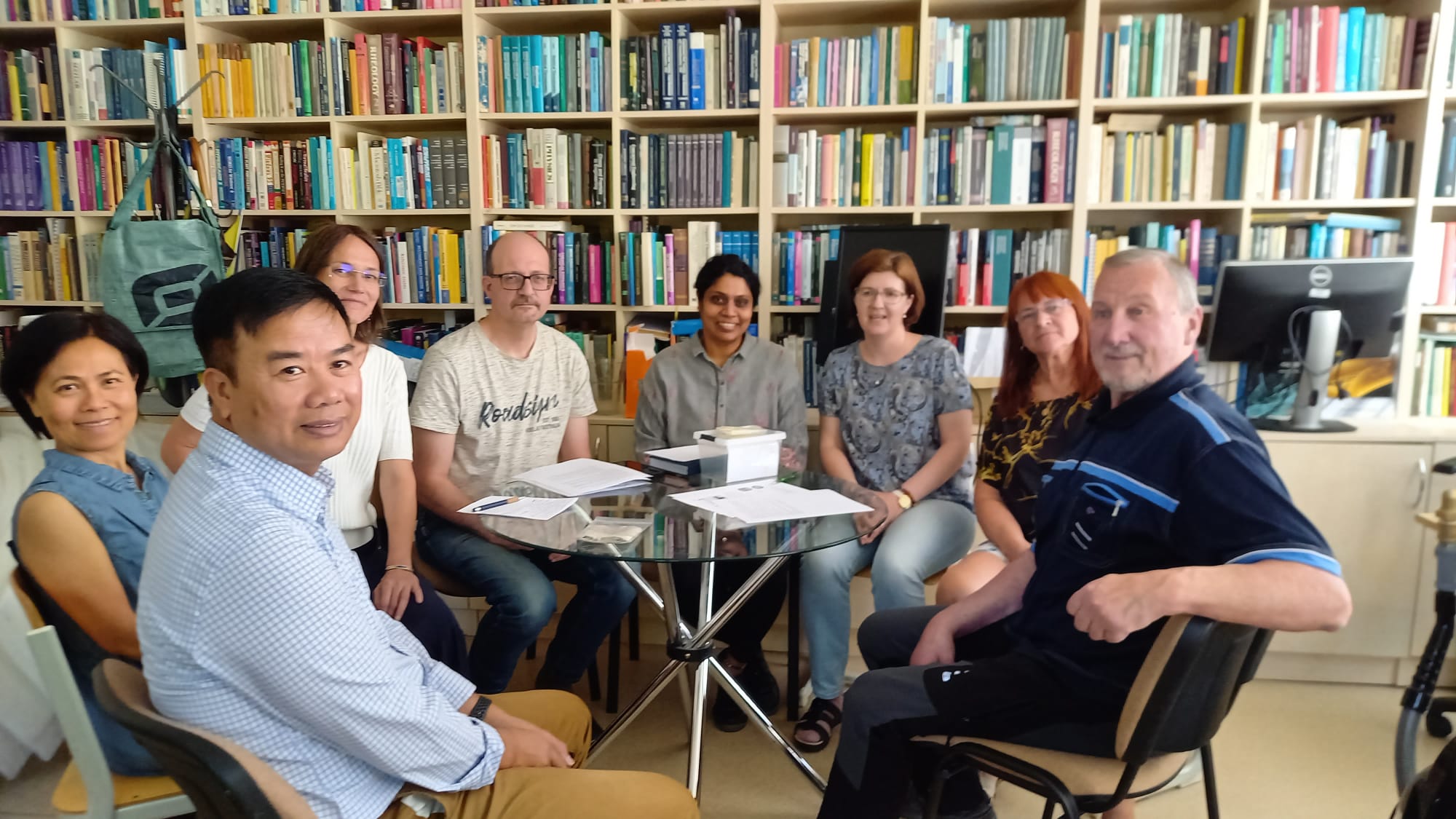
Bilateral Scientific Meeting with RMUTT: Research, AI and Sustainability
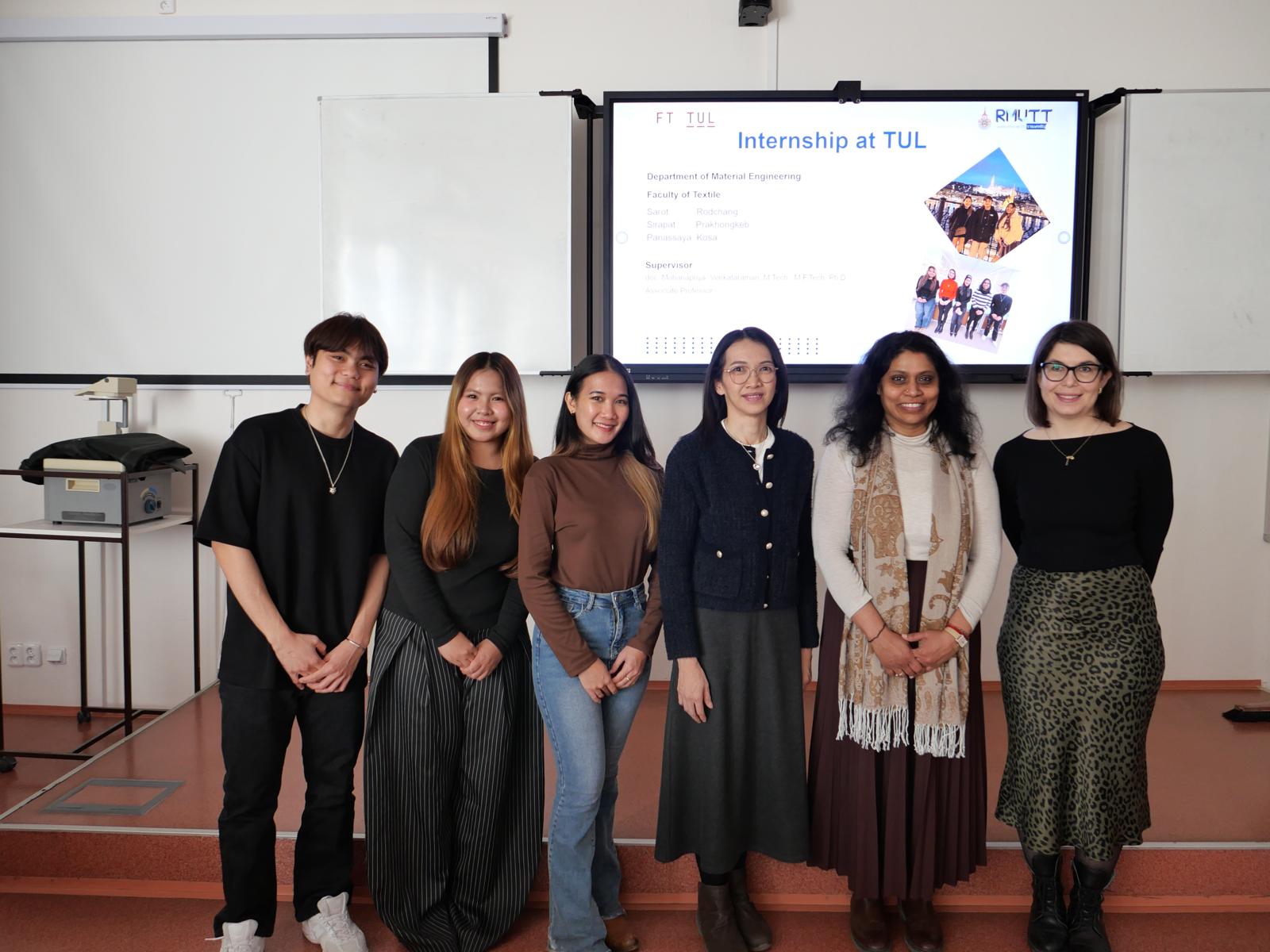
On March 5, 2026, the Faculty of Textile Engineering at TUL hosted a bilateral scientific meeting with representatives of Rajamangala University of Technology Thanyaburi (RMUTT), Thailand. The Department of Materials Engineering also played an important role in the discussions.
The main topics of the meeting included:
- Current research activities at both universities
- Advanced quality management methods in the era of artificial intelligence
- Sustainable textiles and biodegradable polymer fibers.
The program was further enriched by experience sharing from international interns and a strategic discussion on future international cooperation. This collaboration is expected to focus on the integration of materials engineering, environmental protection, and energy in the future.
 Future Scientists in Our Labs: Children's University at KMI
Throughout February (Feb 7th and Feb 28th), our laboratory doors opened to young talents as part of the TUL Children's University. Primary and secondary school students had the chance to experience firsthand that material engineering isn't just theory from textbooks, but a fascinating world full of experiments.
What did the young scientists try out?
- Composite manufacturing and modern microscopy.
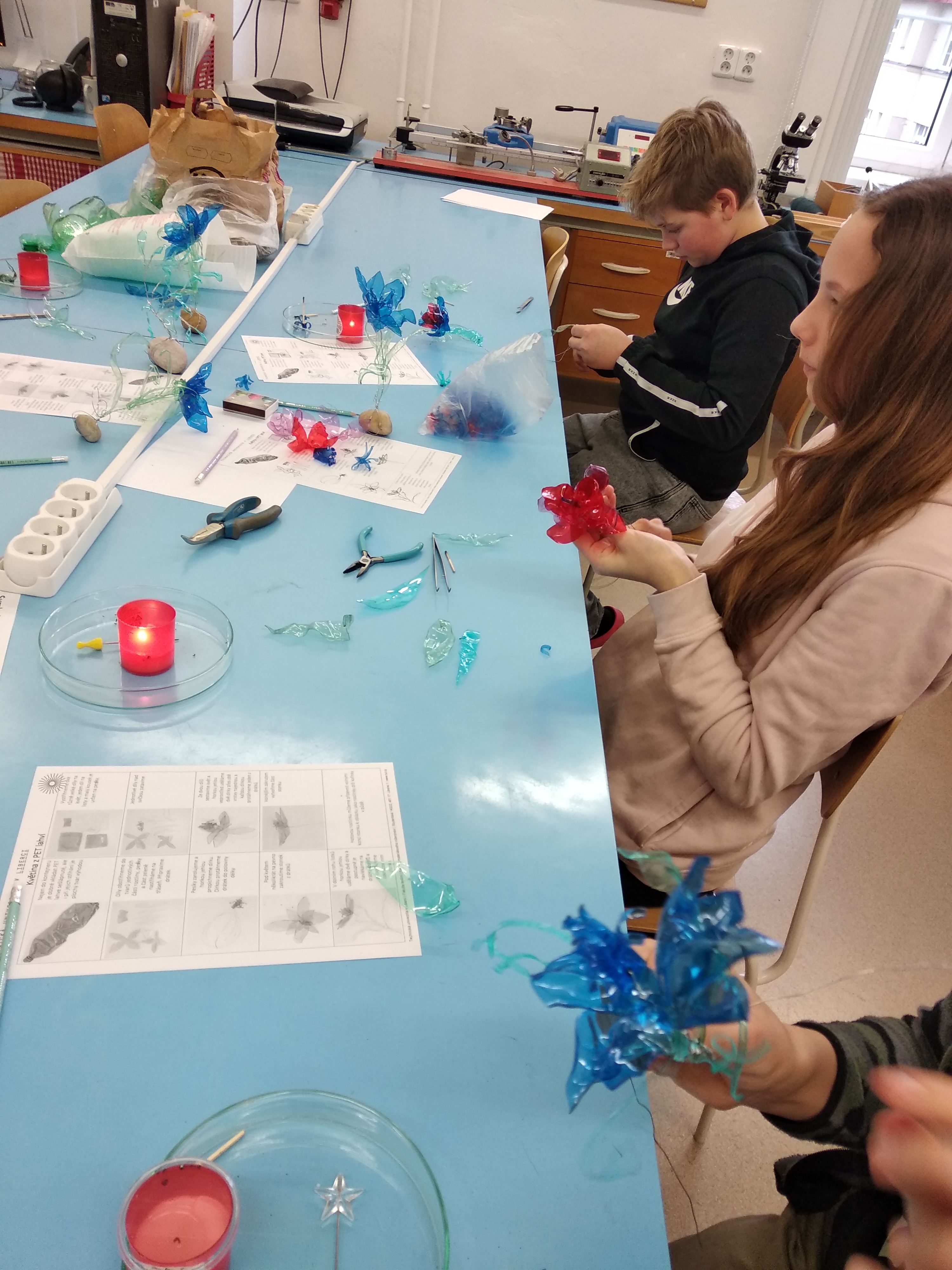
- PET bottle recycling, where they created original flowers from recycled plastic.
- Tensile strength testing, using a dynamometer to verify the durability of fabrics, yarns, and even their own hair.
The goal of these sessions is to spark curiosity in the younger generation and provide them with their first contact with science and technology in a professional environment. We are thrilled by their enthusiasm and hope to see many of them in the future as regular students at our faculty!
 |
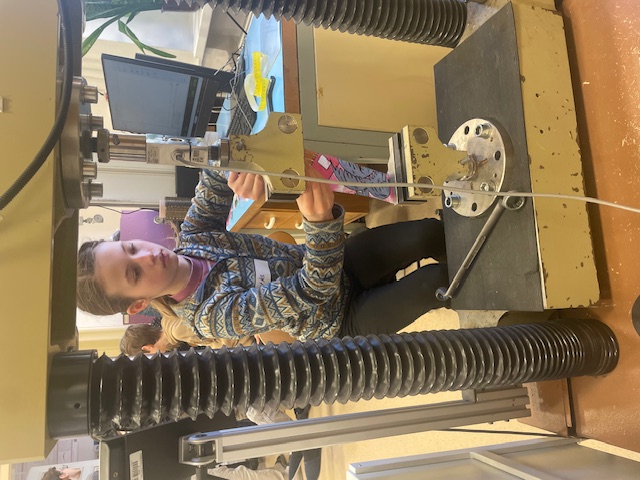 |
| Creating flowers | Tensile strength testing |
 |
|
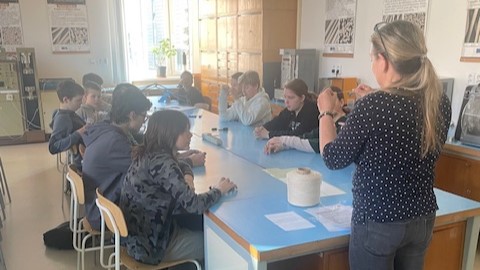
| Sample preparation for testing | |
 Business Academy Students Explore the World of Textile Materials
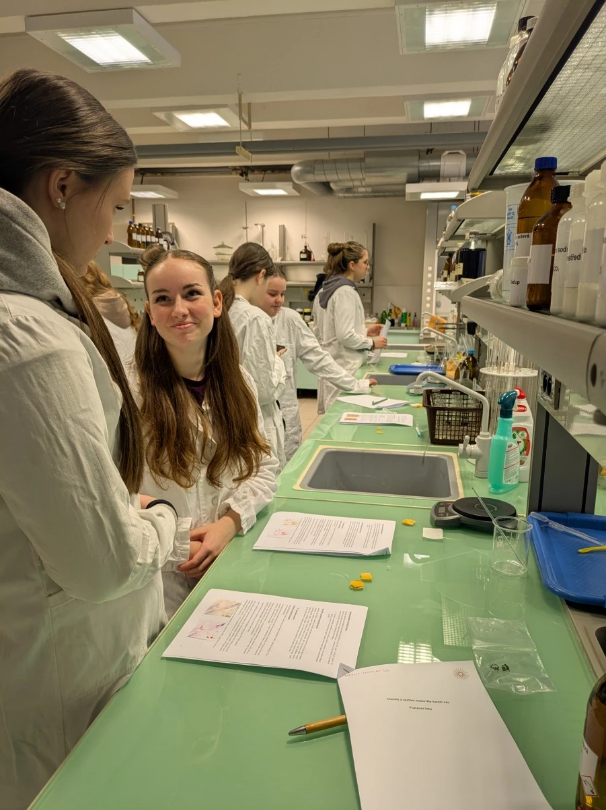
Students of class 2.A from the Liberec Business Academy completed a specialized excursion in the laboratories of the Faculty of Textiles at the Technical University of Liberec. During the visit, they were introduced to the basic types of textile fibers, their properties, and their practical applications.
In the laboratory session, the students tried their hand at fiber microscopy, identified materials based on their physical properties, and worked with modern technologies such as laser engraving and transfer printing. This provided them with direct experience of the methods used in the analysis and finishing of textiles in practice.
The excursion was organized as part of their chemistry curriculum, bridging the gap between secondary education and the university environment while offering a practical demonstration of how chemistry is applied in the real world.
 |
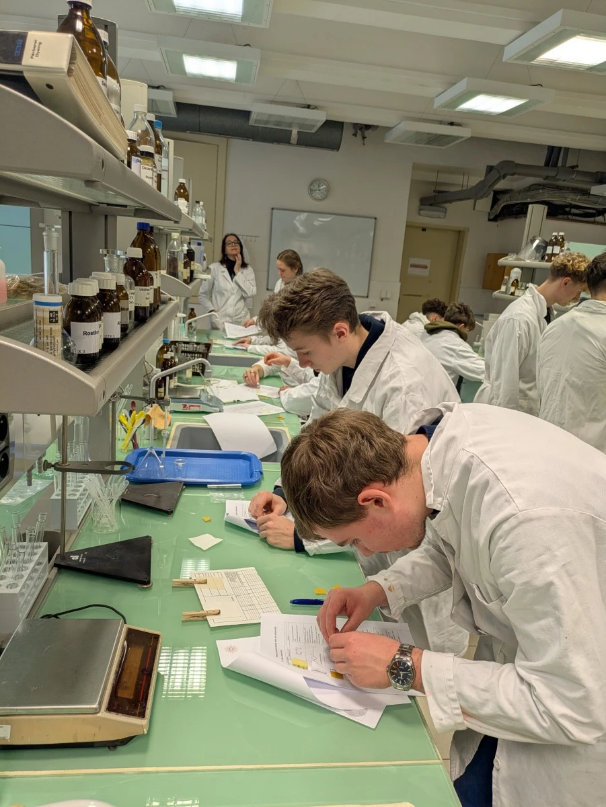 |
| 2.A students explore KMI chemistry labs | |
 In the World of Textiles: Students Explored TUL Faculty of Textiles Laboratories
The long-standing cooperation between the Faculty of Textiles at the Technical University of Liberec and the Secondary Industrial School and Vocational College Liberec (Textile Engineering specialization) continues through regular student visits to our university laboratories.
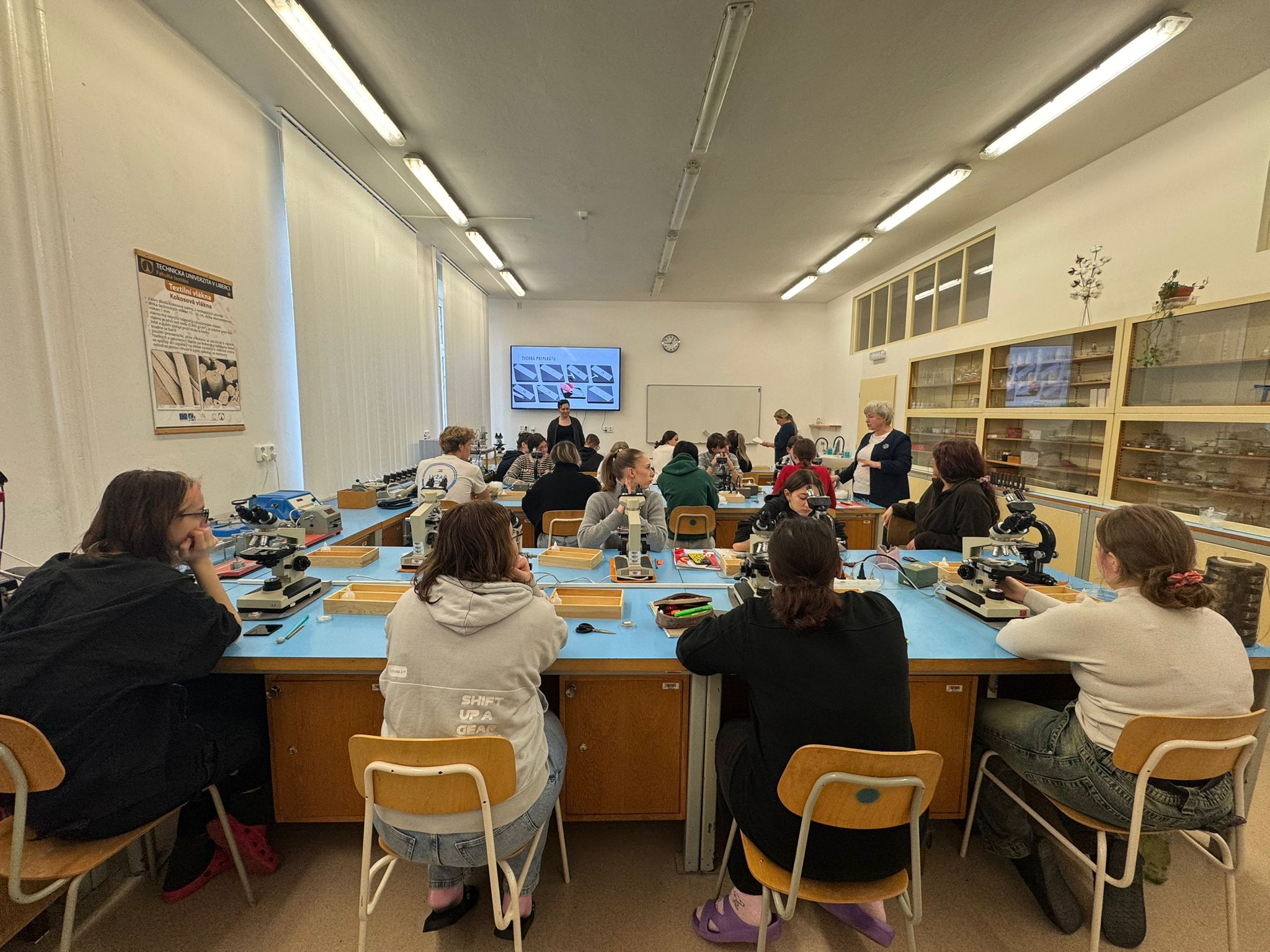
During their practical sessions, third-year students focused on fiber microscopy – observing longitudinal views and cross-sections, while also learning the basics of chemical identification of synthetic materials. Fourth-year students then progressed to testing selected textile properties, such as measuring material strength and elongation, evaluating drapeability, determining geometric parameters, and testing air permeability.
By working with modern laboratory equipment, students gain direct experience with methods for analyzing and evaluating textile materials, giving them a better understanding of how these properties are verified in practice. These sessions naturally bridge the gap between secondary education and applied research, helping students navigate their future study options and career paths.
 |
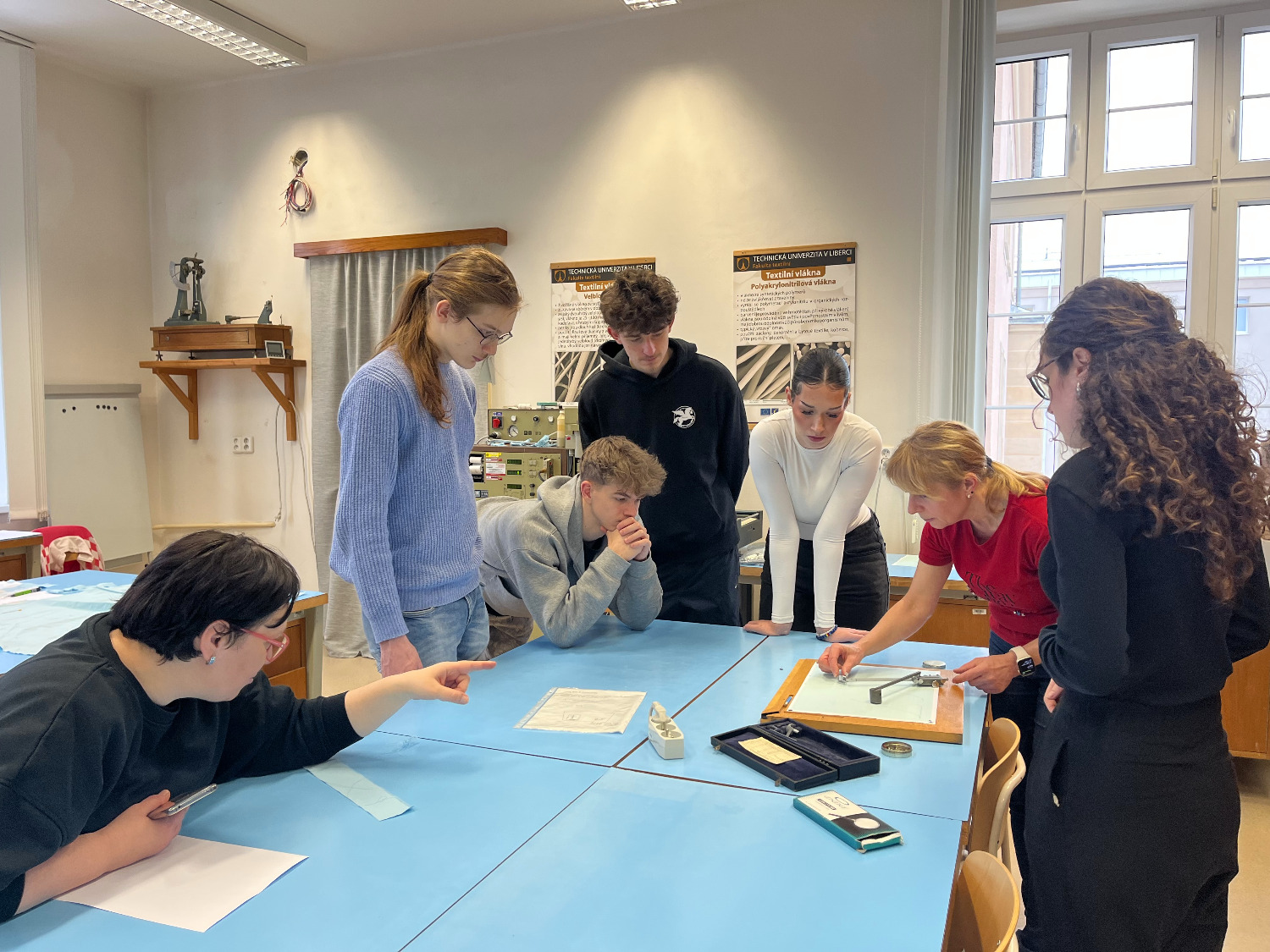 |
| Third-year students examining fibers under the microscope, observing their longitudinal views and cross-sections. | Fourth-year students testing textile properties, specifically measuring material strength, elongation, and air permeability. |
Looking for a thesis topic? The 2026 offers are out!
We have just published the current list of Bachelor's and Master's thesis topics at our department. The offer covers a wide range of subjects, from textile materials to modern engineering methods. Do you have an idea of your own? Don’t hesitate to contact us and discuss your proposal!
Details can be found under Education – Thesis.
 AEQUALIS4TCLF Project
We are part of the international project AEQUALIS4TCLF, which focuses on equal opportunities, respect, and fair working conditions in the Textile, Clothing, Leather, and Footwear (TCLF) industries. The project bridges the gap between education, practice, and sustainability while addressing the challenges of the modern world of work.
Our primary role in the project is WP5 – Communication and Dissemination. In this work package, we ensure that the project’s ideas reach students, the professional community, and the general public – clearly, openly, and in a modern format. Our goal is to ensure that the project's results create a real-world impact, rather than just formal outputs.
.jpeg)


.jpg "Location of TUL")


.png "Diploma Supplement")
.png "ECTS Label")

Faculty of Textile Engineering TU Liberec
Studentská 1402/2
461 17 Liberec 1
Czech Republic
Tel: +420 485 351 111